

If you’re wondering can you put a car lift in a standard garage, the short answer is: often, yes — but it depends on a handful of measurements rather than the garage size alone. Homeowners looking for a garage lift for home use are usually surprised how many standard two-car garages can accommodate a lift once ceiling height, floor space, concrete, and electrical service are checked.

This guide walks through exactly what to check before you buy a standard garage car lift, which lift types tend to fit best, and when a standard garage genuinely won’t work. It’s part of our broader Home Garage Car Lift Guide, which covers the full decision process from lift types to installation planning.
Quick Answer
Yes — in many cases you can put a car lift in a standard garage. Most residential garages have enough ceiling height and floor space for at least one lift type, even if not every type. The main variables are ceiling height (including garage door tracks and the opener), your concrete slab’s condition, available electrical service, floor space around the lift, and the size and weight of your vehicle. Fitting a car lift in a standard garage is more often a matter of choosing the right lift type for your space than a flat yes-or-no.
What Counts as a Standard Garage?
There’s no single formal definition of a “standard garage,” but for lift purposes it generally means an attached or detached garage built for one or two vehicles, with a conventional ceiling height rather than a vaulted or unusually tall one. Most homes built in recent decades fall into this range, though older homes can vary more, and some production-built neighborhoods use noticeably lower garage ceilings than custom-built homes.
Many residential garages are built around a commonly used garage door height, but the ceiling height above the door opening — and the space taken up by the door track and opener — is often different from the door height itself. This is one reason ceiling height needs to be measured directly rather than assumed from the garage door size.
What matters for a home garage car lift isn’t the garage’s classification — it’s the specific measurements inside it. Two garages that both count as “standard” can have meaningfully different usable ceiling height once garage door hardware is accounted for.
The 5 Things to Check Before Installing a Lift
Before assuming a standard garage will or won’t work, check these five things. Skipping any one of them is the most common reason a lift purchase doesn’t go smoothly:
- Ceiling height — measured to the lowest obstruction, which is often a garage door track or opener rail rather than the ceiling itself
- Concrete condition — slab thickness and condition; requirements vary by lift model, and a professional evaluation is strongly recommended
- Electrical service — most lifts run on 110V or 220V circuits; always follow the manufacturer’s specifications for the model you’re considering
- Floor space — clearance for the lift’s footprint plus room to walk around a raised vehicle and open doors
- Vehicle size and weight — height with mirrors folded, and weight checked against the lift’s rated capacity
For the full measurement walkthrough, see Garage Requirements for a Car Lift.
Best Lift Types for Standard Garages
Because standard garages vary so much in usable ceiling height and floor space, the best-fitting lift type depends on your specific measurements rather than a single universal recommendation. The table below is a starting point for comparing options — always confirm the specifications for the exact model you’re considering before buying.
| Lift Type | Typical Fit in a Standard Garage | Best For |
|---|---|---|
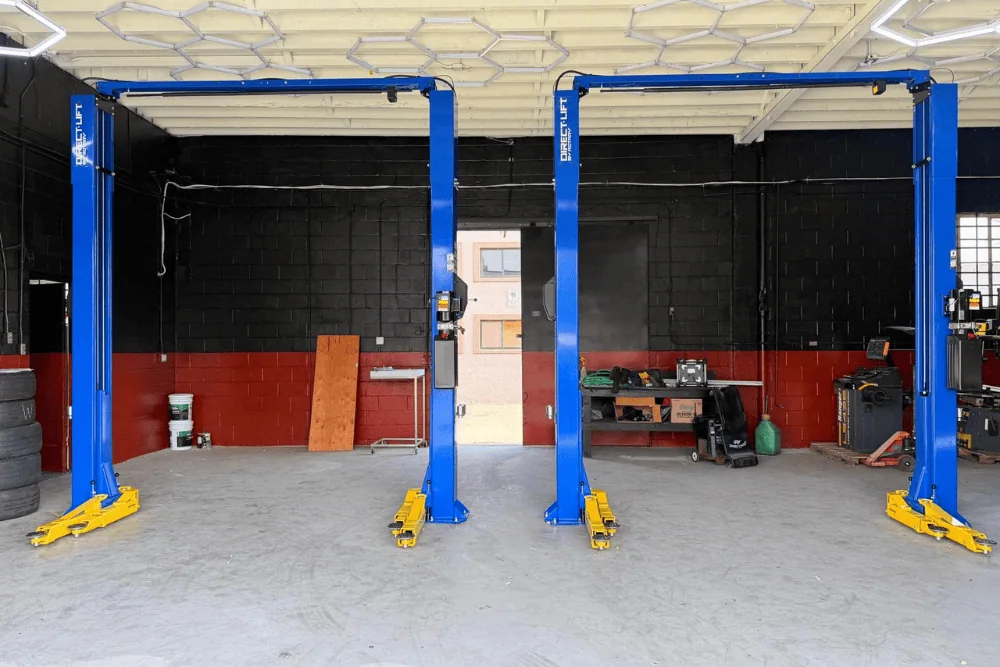
| Two-Post Lift | Fits many standard garages with adequate ceiling height | Repair and maintenance access |
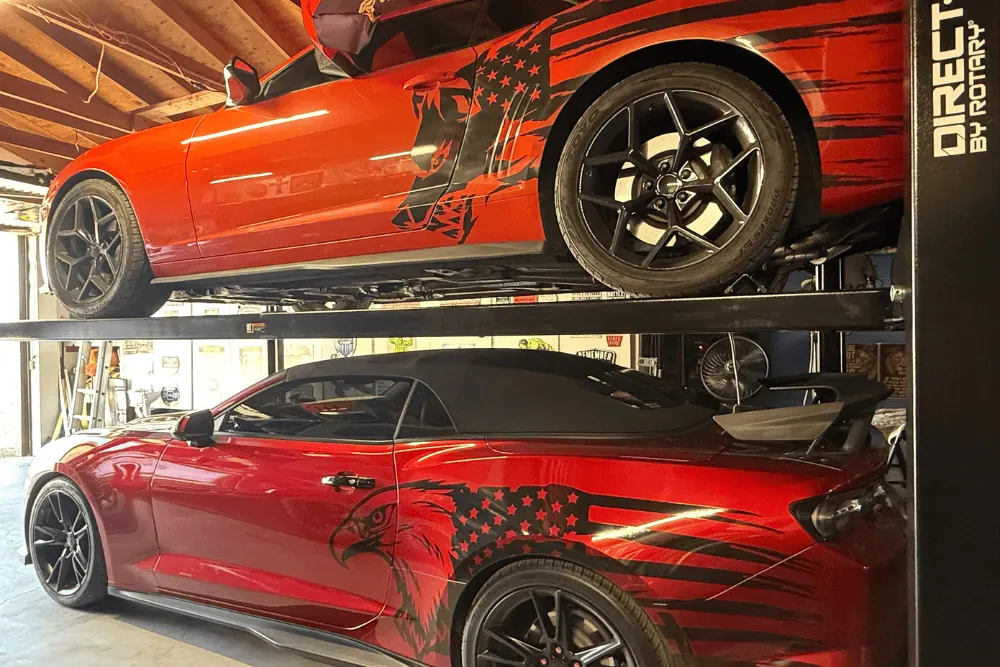
| Four-Post Lift | Fits many standard garages; needs more floor width | Storage and general access |
| Portable Lift | Fits most standard garages | Occasional lifting, tight spaces |
| Mid-Rise Lift | Fits most standard garages | Quick-service work, lower ceilings |
| Low-Ceiling Lift | Built specifically for shorter garages | Garages below typical two-post or four-post minimums |
Browse current options in our two-post lift category and four-post lift category.
When a Standard Garage Will Not Work
A standard garage can fall short of fitting a car lift in a few situations: insufficient ceiling height for every lift type once the garage door and opener are accounted for, a concrete slab that’s too thin, cracked, or otherwise unable to support the load, a floor plan too narrow for the lift’s footprint, or a vehicle that exceeds the lift’s rated capacity or overall raised height.
In several of these cases, a different lift type — often a low-ceiling or portable model — can still work even if the first option you looked at doesn’t. See Best Car Lift for a Low-Ceiling Garage for options built around exactly this problem.
Standard Garage Car Lift Checklist
| Item | Status to Confirm |
|---|---|
| Ceiling height | Measured to the lowest obstruction, not just the ceiling |
| Concrete | Evaluated by a professional if age or condition is uncertain |
| Electrical | Circuit matches the lift manufacturer’s requirement |
| Floor space | Clear width, length, and walk-around room confirmed |
| Vehicle | Height and weight checked against the lift’s specifications |
| Permits | Checked with your local building department if they may apply |
Next Steps Before You Buy
Once you’ve confirmed your garage’s numbers, the next step is matching them to a specific lift type and model. Our Home Garage Car Lift Guide covers the full decision process, from lift types to installation planning, and our Garage Requirements for a Car Lift page walks through how to check your slab and electrical service in detail.
For general lift safety and inspection standards once your lift is installed, the Automotive Lift Institute publishes guidance on annual lift inspections — a useful reference regardless of which lift type or brand you choose.
If you’re not sure which numbers apply to your garage, contact our team — we’re happy to help you figure out what will fit before you buy.